Thursday, July 24, 2025

Let's Talk About "Talking About Freedom"!

Final Post

Talking about Summer Advantage


Hailey - Hey guys welcome back to the Hailey and Sarah show. I’m Hailey


Sarah - and I’m Sarah! Now let's jump right in. Hailey, what did you like about Summer Advantage?


Hailey - I liked Summer Advantage specifically because of the friends that I made, getting used to the campus, and being able to be independent. I feel extra prepared for the fall semester because I was able to see how I was able to do this all by myself and not rely on parents or other guiding figures. I wasn’t originally going to do Summer Advantage, but my friend that I met last summer convinced me to join the program. 


Sarah - I also liked Summer Advantage because I feel like I was really able to see what college life is like before actual college. I was on the fence about Summer Advantage for a while, but one day my parents signed me up and paid the deposit, and I decided to not waste their money and make the most of it. I also liked the fact that I was able to make friends before the fall semester; it makes me feel more content and at home. 


Hailey - On the topic of friends and living with other people; I had friends prior to coming here and we spent time together the first night, they brought their friends that they had made and that gave me the chance to meet more people. I also made friends in both of the classes I took. Living in a communal space was something that I had to get used to because I had never shared a room growing up, but it was actually a really fun experience. I love my roommate that I had for the summer and having her there helped me make more friends as well. There were miniscule problems but we were able to resolve them relatively quickly. I think that the thing that helps us all is definitely communication. 


Sarah - I knew very few people coming into the Summer Advantage program, but I met Hailey in this class and she introduced me to her roommate and her other friends. I had gone to a boarding school a couple years ago, so I know what living away from home and sharing a room with someone I’m not very familiar with is like. I also loved my summer roommate, she was super sweet and helped to wake me up in the morning. I haven’t really had any issues with anyone else, any miscommunication or small argument is resolved rather quickly. 


Hailey - I thought it was a fair amount of work based on how much we learned each day. I also feel like the work really helped me engage more and learn better, I would learn more as I did my work. Both of my professors were very engaging, I usually struggle to learn the first time around but I feel like I learned really quick because of how engaging the classes were. I liked the class discussions because it really helped me to learn more as well. 

Sarah - In terms of work, I think that the workload wasn’t too bad. I have a problem with procrastination, and I also think that that really showed, especially in this class, but the professors are very nice and understanding, and I am completing all this work to the best of my ability. I do think it’s a really good idea to keep in touch with professors no matter what- not just if you have an emergency or if you’re confused about an assignment. Communication is the best tool anyone can use; it helps a lot in any circumstance.

 
Sarah - I also think that waking up on time is key, I try to aim for at least an hour before class. I’m not a morning person whatsoever, and I have to set 3-4 alarms to actually wake up. I try my best to wake up on time, and that doesn’t always work; that’s actually one of the reasons why I wanted to give Summer Advantage a try. I really need to know how to wake up for class in the morning and work towards waking up on time and actually getting up.


Hailey - I agree with Sarah, waking up on time wasn’t the easiest thing to do. I’m really not good at waking up on time, my roommate, Liv, has to wake me up most of the time. Alarms haven’t really worked for me, but I’m going to train myself to wake up earlier by using multiple alarms every day. Summer Advantage also helped with teaching me how to wake up on time, as I haven’t been the best at getting up early in the past.


Hailey - Overall, Summer Advantage was really helpful because I made some really good friends, got some credits out of the way, and broadened my horizons for what I want to be or do in the future. I think that Summer Advantage should start a little earlier to be the entire month of July (July 1st to July 30th), because I feel like it sounds a little shorter and seems more appealing to people who are on the fence about coming to Summer Advantage.


Sarah - I also really liked Summer Advantage, I loved the professors and the classes because I feel like they really helped me to get ahead of the program with my credits. I think that 8 credits in total for two classes over the course of four weeks is really generous and helpful to get ahead and see what college life is like. I’m so grateful that I had the opportunity to come to Summer Advantage! I agree with Hailey on the timing of the program. I feel like it might be easier if it was just for the month of July because it does sound shorter, but I do like the dates that the Summer Advantage program was set to. I’m very grateful that I got to come here!

Reflection on the Reconstruction of America After the Civil War

 Reconstruction of America - Post Civil War

Reflection

As we watched the video on the reconstruction of America after the Civil War, the first thing that really surprised me was that in 2015, a man named Dylann Roof in his twenties went to a small Bible study group, where after, he unloaded a gun on the Black worshippers there. There were nine killed and one injured in the attack. I cannot believe that something like that is still happening in our world; there are way better things to worry about than hating someone purely because of their race. 

The Reconstruction Era had its ups and downs, but I think that the thing that stuck with me the most was that even though America made a lot of progress, people still have to fight for basic rights. There is still a lot of hate in our world today, and a lot of people can’t get jobs because of what they look like or where they’re from. 


In the video, one of the things that was said was, “America could finally be the land of freedom that it promised to be,” which was then followed by, “Black folks had no idea of the cliff they were heading towards.” This, to me, seems to say that even though there was a lot of work to reconstruct America, they still dealt with many issues; the video also mentioned the fact that Black people didn’t really care about what happened to them, as long as they were free. 

The Reconstruction Era is one of the best advancements, but also one of the worst setbacks in America. When John Wilkes Booth assassinated Abraham Lincoln, Andrew Johnson became president and I really feel like that was when things really went south. Frederick Douglass remembered that Andrew Johnson refused to shake hands with a Black man, and he was trying to “keep Black people under control”. 


Overall, I think that the Reconstruction Era was a great advancement, but also a great setback to America because although former enslaved people were freed, they were still seen as less than.


Mock Trial

Mock Trial

Brown v. The Board of Education

Pro-Segregation Argument


 Honorable Justices of the Supreme Court:

I stand before this Court today to defend the constitutional authority of states to maintain separate educational facilities, a practice that has been sanctioned by this Court's own precedents for over half a century.

The Plessy Precedent Remains Sound Law

In Plessy v. Ferguson (1896), this Court established the fundamental principle that separation of the races, when facilities are substantially equal, does not violate the Equal Protection Clause of the Fourteenth Amendment. The Court wisely recognized that "the object of the amendment was undoubtedly to enforce the absolute equality of the two races before the law, but in the nature of things it could not have been intended to abolish distinctions based upon color, or to enforce social, as distinguished from political equality."


This precedent has stood for 58 years and has been consistently applied in educational contexts. In Cumming v. Richmond County Board of Education (1899), this Court declined to interfere with local educational decisions, recognizing the priority of state authority in this domain.

Original Constitutional Intent

The historical record demonstrates conclusively that the creators of the Fourteenth Amendment did not intend to prohibit educational segregation. At the time of ratification in 1868, numerous states that voted to adopt the amendment simultaneously maintained segregated school systems. Congress itself established segregated schools in the District of Columbia during this very period. If the amendment prohibited educational separation, surely its own authors would not have simultaneously violated their creation.

Federalism and State Sovereignty

Education has traditionally been, and must remain, within the exclusive province of state governments under the Tenth Amendment. The Constitution delegates no authority over education to the federal government. Local communities are best positioned to determine educational policies that serve their populations effectively. Federal judicial interference in local school governance represents an unprecedented expansion of federal power that threatens the constitutional balance between state and federal authority.

The Separate but Equal Standard Provides Adequate Protection

Our position does not advocate for inequality. Rather, we maintain that separate facilities, when truly equal in quality, resources, and educational opportunity, satisfy all constitutional requirements. The proper remedy for any inequality is to improve facilities, not to mandate integration that may disrupt established educational systems serving both communities effectively.


Practical Considerations of Judicial Restraint

This Court has wisely exercised restraint in matters of social policy, recognizing that forced social changes often produce unintended consequences. Educational integration represents a fundamental alteration of long-established social arrangements that should evolve through democratic processes rather than judicial mandate.

Conclusion

The Constitution, properly interpreted according to its original meaning and this Court's established precedents, permits states to maintain separate educational facilities. The principle of "separate but equal" provides a constitutional framework that protects individual rights while preserving legitimate state authority over education.

We respectfully urge this Court to uphold these fundamental constitutional principles, as the will of the "separate but equal” doctrine declares. 

Thank you. 


Sunday, July 13, 2025

The Freedmen's Bureau

 The Freedmen's Bureau

As the Civil War was coming to an end, Congress created the Bureau of Refugees, Freedmen, and Abandoned Lands, more commonly known as the Freedmen’s Bureau, on March 3rd, 1865. The Freedmen’s Bureau was established to provide practical aid to four million newly-freed African Americans during the transition from enslavement to freedom. The Freedmen’s Bureau built hospitals and gave direct medical care to over one million freedmen, despite poorly trained personnel and inadequate funds. 

The Freedmen’s Bureau promoted and encouraged education for the newly freed African Americans, and over $400,000 was spent to create teacher-training institutions. Clark Atlanta University, formerly known as Atlanta University, and Fisk University, originally Fisk School (named after a Bureau member, Clinton B. Fisk), were among the historically Black universities and colleges that the Bureau provided aid to. 

The Freedmen’s Bureau’s mission included operating hospitals and refugee camps, issuing rations and clothing, supervising labor contracts between planters and freedmen, managing apprenticeship disputes and complaints, assisted in the establishment of schools, helped legalize marriages entered into during enslavement, and providing transportation to freedmen who were attempting to locate their loved ones or relocate to different areas of the country. The Bureau also added more duties, for example, helping Black soldiers and sailors obtain back pay, pensions, and bounty payments.

Unfortunately, even though the Freedmen’s Bureau was an incredible advancement in Reconstruction, there was still violence daily for the freedmen and the Bureau agents. The Bureau’s courts were poorly organized, and “only the barest forms of due process of law for freedmen could be sustained in the civil courts,” (Britannica.com, “Freedmen’s Bureau”). Some Whites were still extremely hostile towards the freedmen, as well as the agents of the Bureau. 

The Freedmen’s Bureau also controlled confiscated and abandoned lands in the South; they were authorized to divide them into 40-acre plots to rent to freedmen and white refugees loyal to the Union. The Bureau was a very elaborate organization, but was always understaffed and underfinanced, no more than 900 Bureau agents served at any one time, meaning that large areas of the South were not supervised by the Bureau. 


The Bureau was widely hated by the whites in the South because they thought that it interfered with their way of returning to “normal” relations between the races; they believed that the agents of the Bureau were “meddlesome and misguided idealists who did not understand the ‘true nature’ of Blacks,” (ncpedia.org, “Freedmen’s Bureau”). This way of thinking was also shown by historians, who have criticized the Bureau for not promoting true independence for the freedmen. 

Congress tried to extend the Freedmen’s Bureau in 1866, but President Andrew Johnson vetoed the bill; this led to political controversy and eventually also to a split between congressional Republicans and the president. Congress did eventually enact the Freedmen’s Bureau Bill, which increased its power and lasted until around 1872, when the Bureau was abolished.  


The white people in North Carolina were generally against most of the Bureau’s activities because they resented their involvement in labor relations. Most Black people generally trusted the Bureau and were happy for the assistance with starting their own independent and free lives. 


Suzanne Bordelon, Freedwomen and the Freedmen's Bureau: Race, Gender, and Public Policy in the Age of Emancipation, Journal of American History, Volume 98, Issue 3, December 2011, Pages 839–840, https://doi.org/10.1093/jahist/jar503 

The Editors of Encyclopaedia Britannica. "Freedmen’s Bureau". Encyclopedia Britannica, 5 May. 2025, https://www.britannica.com/topic/Freedmens-Bureau. Accessed 13 July 2025.

The Valley of the Shadow, “The Freedmen’s Bureau Records: Browse by Topic”. The Valley of the Shadow, https://valley.lib.virginia.edu/VoS/fbureau/bureau_topics.html Accessed 13 July 2025

National Archives Editors, “The Freedmen’s Bureau”, National Archives, 28 October 2021, https://www.archives.gov/research/african-americans/freedmens-bureau Accessed 13 July 2025

Alexander, Roberta Sue. "Freedmen's Bureau." NCpedia. State Library of NC. 2006. https://www.ncpedia.org/freedmens-bureau

Claude AI - Prompt: “Please give me scholarly sources to learn about the Freedmen’s Bureau”

Images from Google Images

Friday, July 11, 2025

GWTW Summary + Reflection

Gone with the Wind

Summary + Reflection

Summary: 

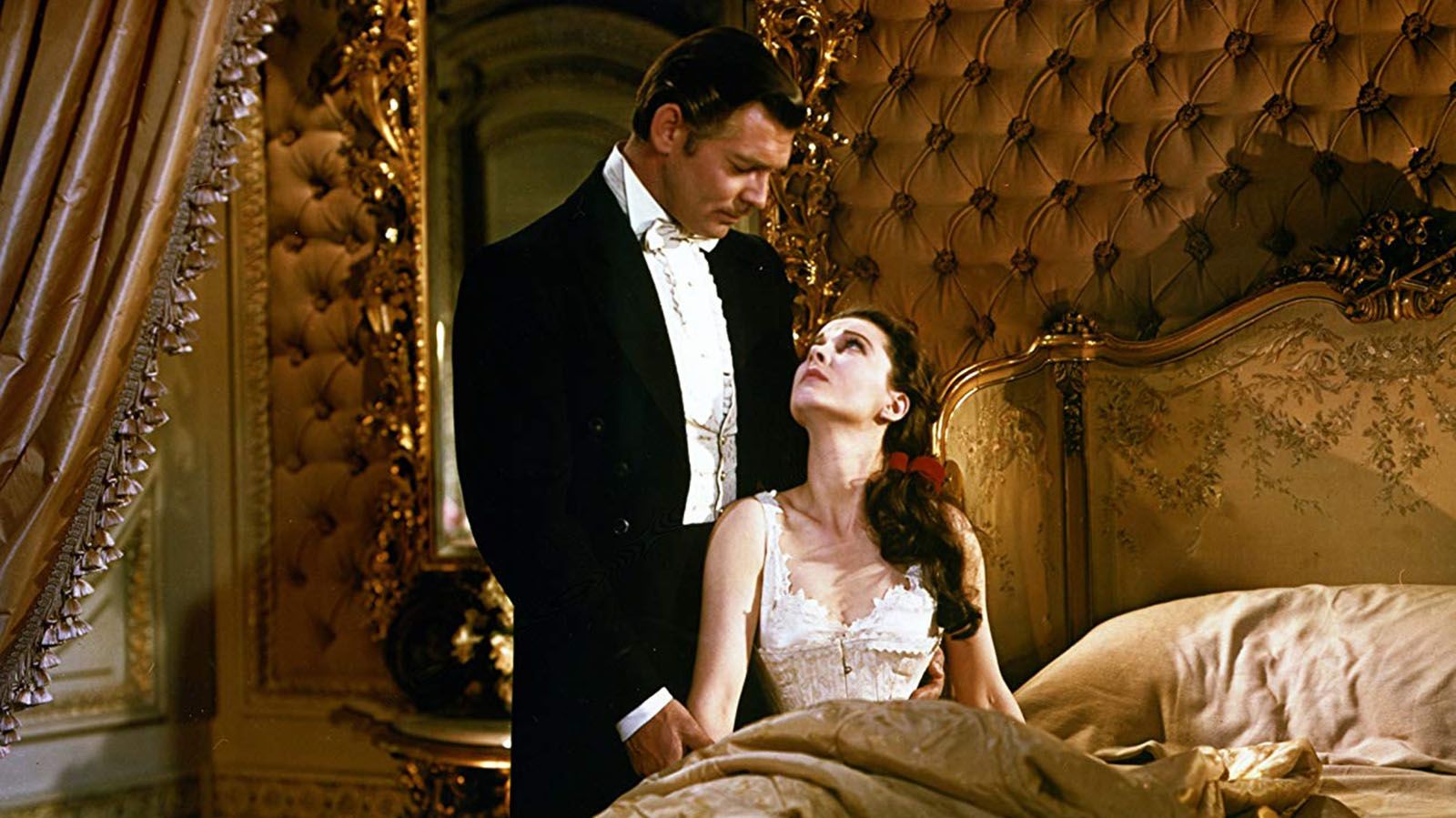
"Gone with the Wind" is a book and film surrounding the events of the Civil War. The main character is Scarlett O'Hara, who is a young woman, living in the South and in love with a Confederate soldier, Ashley. She is seen surrounded by men who want her hand in marriage, but she flirts around, seeming to try to make Ashley jealous as he is marrying another woman, Melanie. 

Scarlett is again surrounded the next day at a barbecue held at the plantation neighboring hers by her admirers, but grows jealous of Ashley and Melanie; she agrees to marry Charles Hamilton after she confesses her love for Ashley and he turns her down. She also is confronted by another soldier, Rhett, who had heard the entire conversation between her and Ashley and he seems to ridicule her, as well as show interest. 

Scarlett, now married to Charles, finds out that he has died in the war and enters the mourning period. She then travels to Atlanta to stay with Melanie and sees Rhett again, and she dances with him, even though they were being looked down upon by the others. It seems then that she started to feel something for Rhett, but she was still consumed by her love for Ashley and remains confident that she can have him. Gone with the Wind – Babcock Theatre

Scarlett volunteers in the hospital as a nurse and tends to injured and dying soldiers; she and Rhett seem to grow closer, and Scarlett has to deliver Melanie and Ashley's baby while everyone else is away, as she promised Ashley that she will take care of Melanie for him. The house slave, Prissy, says that she can deliver babies but grows anxious and draws into herself, leaving Scarlett to take care of Melanie just as she promised. 

The South starts to crumble as the Union grows stronger, and they are forced to flee. On the way back to Scarlett's hometown, Rhett leaves her, giving her his gun and saying that he is joining the army. Scarlett, Prissy, Melanie, and the baby make it back to find out that the town is also in ruins and Scarlett's mother has passed. 

Reflection: 

I think that it's really interesting that both the book and the movie adaptation were telling the story of the Civil War in the perspective of an individual living during that time. I've noticed that a lot of books and media that are historical fiction tell the story through someone who has a bigger role in the specific event, and I really like how "Gone with the Wind" tells a huge moment in history through the eyes of an individual who was impacted but not directly involved. 

I also thought it was really interesting to show the dynamic between Scarlett and Ashley because Scarlett was pining for him throughout the entire first act of the movie; I think it makes her character easier to connect to. She was struggling with her intense love for Ashley and the hurt and jealousy that he was marrying Melanie, which I think that many people can relate to, but she was also struggling with the world as she knew it crumbling around her. 'Gone With the Wind' returns to HBO Max with new introduction

Something that I think was really surprising was that the writers and directors of the film adaptation (and the book) decided to add a lot of romance into "Gone with the Wind". I think it was a good idea to add the romance aspect because it really shows me how much Scarlett was actually struggling, she was struggling with grief, heartbreak, jealousy, and the feeling of being unsure, which made me connect to her character more as well. 


Tuesday, July 8, 2025

History of the Supreme Court

Supreme Court Reflection

Even though the Supreme Court has become a model for high courts around the world, the Supreme Court Justices are still people and have their own issues too. I do feel like a lot of people villianize some Justices because of their role in the United States government, but I also think that we have to remember that they're people too. 

They seem to have a lot to deal with, as they receive 7000 cases a year. They only take about 100 of those 7000 cases for full consideration. I wonder how they decide which cases to take and which to drop, because they must have people that get upset if their case isn't taken; the Supreme Court has the ability to pick and choose which cases to take. 

I think that the Justices in the U.S. are also extremely respectful of each other; before any conference, they shake each other's hands. They also have a rule that in conferences, "everybody speaks once before anybody speaks twice"- that shows extreme restraint and respect towards everyone in the conference and  also gives them the opportunity to all share facts and state their opinions before anyone elaborates more. 

The Supreme Court Justices interpret a 200-year old Constitution. There have been just over 100 Supreme Court Justices in the United States; they are the ones who converse and make the decisions. The public does not have direct ability to provide their opinion by voting in the ballot box, which can be aggravating for those who have strong opinions on the cases that the Court takes. 

The Court's authority wasn't always accepted, and it must have been difficult for both the Justices and the individuals to change their ways. The Court is supposed to draw the boundaries of the government's power and when they take a case, it is on the air very soon after to let the individuals know how their lives can be affected. 

In the two videos that we watched in class, the narrator said, "The power of the Court is the power of trust earned by the American people." This shows that the Supreme Court gets their power from individuals in our country; without the trust of the American people, the Supreme Court would not be able to function as heavily as it does.  

Monday, July 7, 2025

Mary Todd Lincoln Speech

Mary Todd Lincoln - A First-Person Account of Slavery

[The White House, 1863]

Hello everyone, my name is Mary Todd Lincoln. I shamefully confess to you all that my upbringing was of extreme privilege in Lexington, Kentucky; my family owned enslaved people, and I cannot believe that my earliest memories were shaped by a country whose system treated living, breathing human beings as property. 

Similar to so many others in Kentucky, my upbringing consisted of witnessing the dependence on the labor of enslaved African Americans who lived and worked in our home. When I was born, more than 93% of the Black residents of Lexington were enslaved, and I grew up with this fact being the world that I knew, but knowing something and accepting something as right are two different things entirely. 

When my darling husband Abraham visited our Lexington family home in the fall of 1847, enslaved African American people still worked and lived there. I saw him observe the scene with discomfort in his eyes, and I grew to deeply admire his moral clarity surrounding slavery. He once said, "If slavery is not wrong, nothing is wrong. I cannot remember when I did not so think, and feel."

Unlike my husband, I cannot ever claim to have opposed slavery right from my earliest days; my opinion grew and changed, shaped by my exposure to different perspectives as I moved beyond Kentucky and my marriage to my dearest Abraham. When I left my family in Lexington to live with my sister, Elizabeth, in Springfield, Illinois, I began to see slavery in an entirely new light. 

As an adult, I have had a clear opposition to slavery, although I understand that the views and history of my family complicates this. I have never owned enslaved people myself, and as I grew and matured, I realized that this institution is clearly wrong, though I cannot ignore the fact that my comfortable childhood and upbringing was built upon the unpaid labor of human beings who deserved freedom. 

During my time as First Lady, the irony is not lost on me that some of my closest relationships were with formerly enslaved people. My seamstress and friend, Elizabeth Keckley, was born into slavery and eventually bought her own freedom, showing a strength and dignity that I had not previously known. Elizabeth means so much to me, she has been a friend, a counselor, and a witness to the private moments of our family's life in the White House. Elizabeth helped me understand the true cost and meaning of slavery, not just physical chains and bondage, but also the seperation of families, denial of education, and crushing of dreams. How would you feel if someone said you cannot do something, just because of your race or gender?

Elizabeth has helped me realize that this war must end slavery forever. As I write this speech in 1863, our nation is tearing itself apart over the institution that shaped my childhood, along with the childhood of many others. My husband has just issued the Emancipation Proclamation, declaring freedom for the enslaved people in rebellious states. I hold my family close to my heart and love them dearly, but I cannot love and support the system that determined our way of life. Everything that we had was built from the labor of these people that we took for granted, and I will not ever stand for that.

Thank you.


Sources:

Claude AI

Mary Todd Lincoln

Let's Talk About "Talking About Freedom"!

Final Post Talking about Summer Advantage Hailey - Hey guys welcome back to the Hailey and Sarah show. I’m Hailey Sarah - and I’m Sarah! Now...